



Preacher in Power: Aderemi Oseni’s Doctrine, Governance Model Unveiled
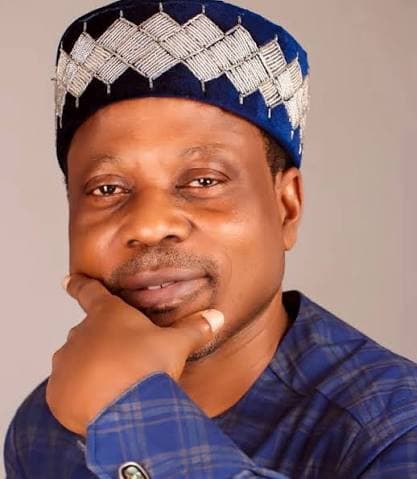
By any measure, Honourable Aderemi Oseni is an unusual figure in Nigeria’s House of Representatives.
A Pentecostal pastor who speaks in the language of spreadsheets, a legislator who frames politics as evangelism, and a businessman-politician who openly celebrates the riches unlocked by fuel subsidy removal, Oseni sits at the crossroads of faith, power, and ambition.
In this wide-ranging interview, he offers a window into how Nigeria’s governing elite thinks—and why conviction can be both an asset and a blind spot.
Hon. Oseni
When Honourable Aderemi Oseni talks about roads, he does not begin with potholes or press statements. He begins with data.
“At the National Assembly, we don’t originate budgets, we only review what the executive presents,” he says, almost clinically. “But this 10th Assembly has been unique. On federal roads, we’ve done more than expected—both in legislation and in supervision.”
As a member of the House of Representatives from Ido/Ibarapa Federal Constituency of Oyo State and a Regional Overseer of the Mountain of Fire and Miracles Ministries, Ogba Mega Region in Lagos, Oseni is keen to project himself as a man of method in a system notorious for improvisation. He insists that Nigeria’s road crisis is not merely about money, but about how that money is used—and misused.
“We inherited a terrible situation,” he says bluntly. “The funds were not there when President Tinubu came in. What you’re seeing now is transition—from what we used to experience—to improved allocation and implementation.”
That framing is telling. For Oseni, failure is largely historical; improvement, always present tense.
Contractors, Not Cash
Pressed on why newly constructed roads collapse within two years—he is pointedly reminded of the Abuja–Lokoja highway—Oseni does not hedge. He points fingers squarely at contractors and the agencies that supervise them.
“Yes, it is more of a contractor problem than funding,” he declares. “If you have ₦100 million for a ₦1 billion job, do the ₦100 million work properly and stop. Don’t spread it thin and deliver a shoddy job.”
As part of legislative oversight, Oseni says his committee developed a 14-point agenda for the Federal Roads Maintenance Agency (FERMA), with “value for money” as its anchor. He speaks approvingly of the Ministry of Works’ push for concrete road pavements, positioning it as evidence of a government finally willing to rethink old habits. A Pastor Among PoliticiansOseni’s dual identity as pastor and politician is not something he downplays. In fact, he leans into it, almost daring critics to challenge the moral authority he claims it gives him.“Seventy percent of people in government have no business being there,” he says. “If people like you and I had been involved before now, this country would not be where it is today.”Politics, in his telling, suffers from an absence of righteous intent. Many enter, he argues, without ideology, guided only by greed. The consequences, he warns, are spiritual as much as material.“Go and check the lives of people who stole public money,” Oseni says, his voice turning preacherly. “The end of almost all of them is never good. Four or five years after leaving office, they start begging.”For him, incorruptibility is not enforced by institutions but by personal conviction. “When you set a standard and people know this is who you are,” he insists, “they begin to adjust.”It is a powerful narrative—but also one that places extraordinary faith in individual morality over systemic reform. Evangelism by Ballot BoxOseni’s landslide victory in 2023 is central to his self-image. He recounts it with relish: winning every polling unit, every ward, every local government; results so lopsided they were never challenged in court.“By 3pm, the incumbent had already left,” he recalls. “In another local government, I was declared winner by the people even before the official result.”The secret, he says, was not money or spectacle, but method. He rejected mass rallies as “jamboree” and instead spent nine months moving ward by ward, unit by unit. Politics, for him, was evangelism.“My coming into politics is to evangelise,” Oseni says without irony. “To see how many people I can convert to Christ and how many I can help.”It is an admission that blurs the line between spiritual mission and democratic contest—a blur that many Nigerians, wary of clerical influence in governance, may find unsettling. Eyes on Agodi Government HouseOseni does not deny his governorship ambition. “Yes, absolutely,” he says when asked if he plans to run in Oyo State.The problem, as he frames it, is not policy but leadership. Quoting Proverbs, he argues that Nigeria’s crisis is moral before it is managerial.“What we have is more than enough to take care of our people,” he says. “The vacuum is leadership.”On the sensitive question of power shift away from Ibadan, Oseni is pragmatic, even unsentimental. Demography, he argues, is destiny.“Ibadan has the numbers,” he says flatly. “Nobody can win without negotiating with Ibadan. Power shift is not something you demand; it’s something you negotiate.”In a state where agitation for inclusion often collides with political arithmetic, Oseni’s stance may be realistic—but it offers little comfort to marginalized zones hoping for rotation rather than bargaining. Tinubu’s Loudest DefenderIf Oseni is cautious about his own ambitions, he is unequivocal about President Bola Ahmed Tinubu. His assessment borders on reverence.“This is the best President we have ever had,” he declares. “Only someone blind, deaf, or mischievous would say otherwise.”He ticks off achievements with the confidence of a campaign surrogate: student loans, fuel subsidy removal, tax reforms, rising revenues, health sector intervention, bold road projects, agricultural inputs, mass employment.On subsidy removal, Oseni makes a rare, candid admission: it made him richer.“I became a multi-billionaire,” he says matter-of-factly. “All my petrol stations are wet every day now.” Conviction Without DoubtThroughout the interview, Oseni speaks with certainty—about data, about God, about politics, about President Tinubu. Doubt rarely intrudes. Institutions matter less than intention; systems bend to character; history is rewritten by the righteous.That confidence is both his greatest strength. In a country desperate for leaders who believe in something beyond personal gain, Aderemi Oseni’s conviction is refreshing.When faith, power, and ambition align so neatly, who does the questioning?
More like this